Nature offered us thousands of options.
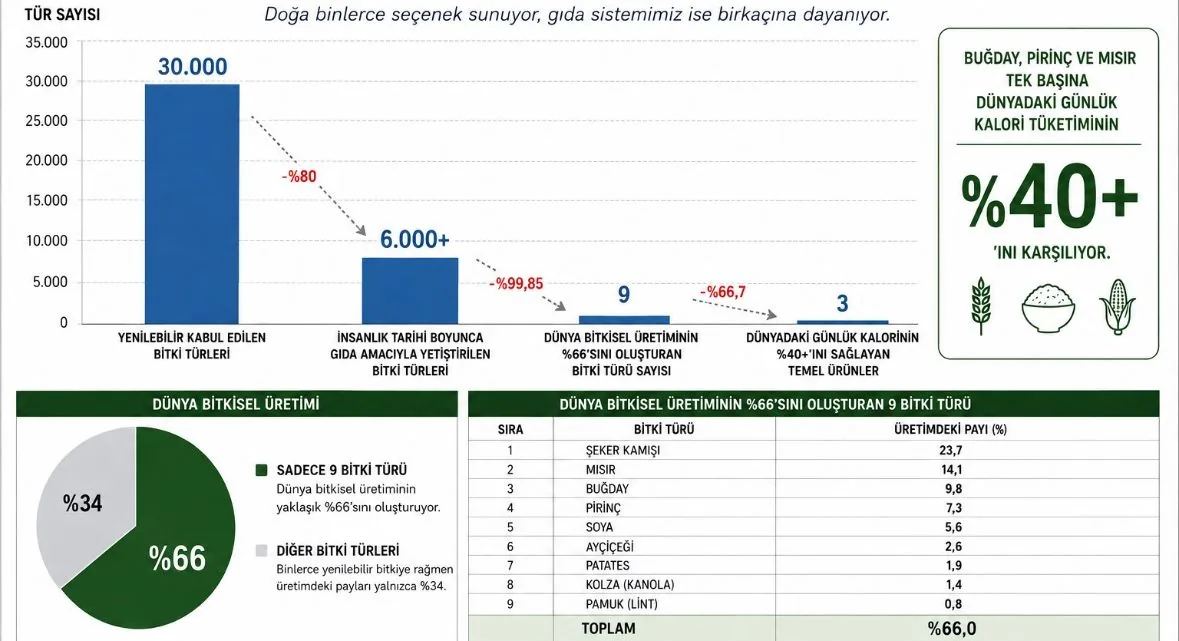
Around 30,000 plant species in the world are considered edible. Throughout human history, more than 6,000 plant species were grown for food. But today the picture is very different. Only 9 plant species make up about 66% of the world's plant production.
Even more thought-provoking is that wheat, rice, and corn alone meet more than 40% of daily calorie consumption in the world. On one side, the thousands of options nature offers; on the other, the diets of billions of people coming to rely on an ever more limited number of products.
I think these figures tell us something important. Incredible technological progress has been achieved in food production. We increased yield, we scaled production, we developed new processing technologies. We built systems that can carry food from one end of the world to the other.
Now we are talking about artificial intelligence, biotechnology, and next-generation production systems. But alongside all this progress, we also need to think about another question. While our food technology has diversified this much, why have the basic raw materials we use not diversified to the same degree?
Some of the great food innovations will not be invented from scratch in a laboratory. They will come from plants we do not make enough use of today. New protein, fiber sources, different nutrient profiles, new functional ingredients, new flavors, and new raw materials that can adapt to changing agricultural conditions.
The point here is not abandoning wheat, rice, or corn. The point is being able to share, with a broader biological diversity, the great responsibility we have placed on a few staple products.
The work I have done for years in the food sector leads me to think this. Sometimes innovation is not inventing something that does not exist. It is discovering something that already exists, but whose value we have not yet noticed enough.